Itinerary 2
The Villages and the “Scus”
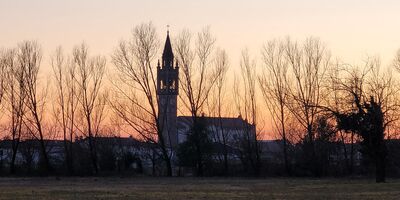
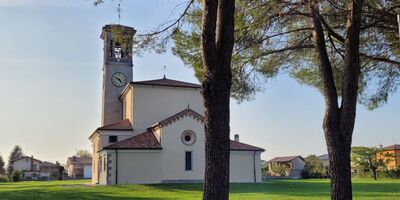
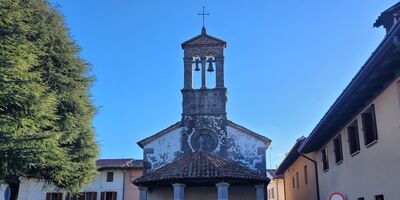
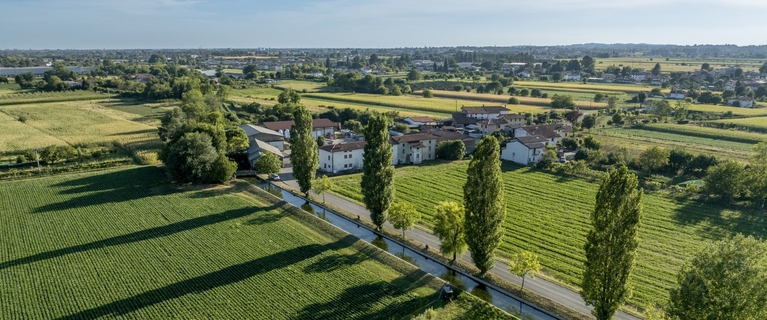
The natural appeal of the area is complemented by its historical and artistic heritage, reflected in the charm and beauty of Rojale’s characteristic villages. Here, nature blends seamlessly with the built environment, where churches, small votive chapels, farmhouses and historic buildings of great interest can be found.
During the last century, Rojale became especially known for the craftsmanship of scus—corn husks in the Friulian language—and later for wicker and ironwork. To preserve this heritage, the Permanent Exhibition of Corn Husk and Wicker Craft was established in the former primary school building in Reana, together with the Vetrina del Rojale in Remugnano, managed by the Rojale Pro Loco, founded to promote the area and its unique features.
The route
Itinerary 2 was created to enhance the historical and artistic heritage of Rojale as well as the traditional scus craft.
The route connects with Itinerary 1. From the square in Rizzolo, next to the Parish Church of Saints Hilary and Tatian, visitors can begin exploring the villages and their most significant cultural landmarks.
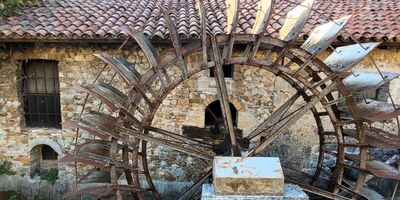
The route continues north to the ancient Battiferro of Rizzolo, then on to Ribis and Reana, home to the Permanent Exhibition of Corn Husk and Wicker Craft, and shortly afterwards to Remugnano, where the civic centre and Town Hall are located. From here, the itinerary reaches the hamlets of Valle, Vergnacco and Qualso before continuing to Zompitta, where, near the Torre stream dam, it reconnects with the Passeggiata delle Rogge cycle and pedestrian path.
Together, Itineraries 1 and 2 form a loop that covers the entire Rojale area. The ideal starting point is the Town Hall, from which Itinerary 3 also begins.

Places to discover along the way
Churches and votive chapels, historic settlements, stone sculptures and characteristic corners of Rojale can be discovered along this route, which starts in Rizzolo in the south and leads back to Zompitta, where it reconnects with Itinerary 1.